Why Jaisalmer Fort Is Called the Living Fort of India

Patwon Ki Haveli Jaisalmer: History, Design, and Cultural Significance
December 13, 2025
Exploring Indo-Pak Border Tourism in Jaisalmer Safely
January 5, 2026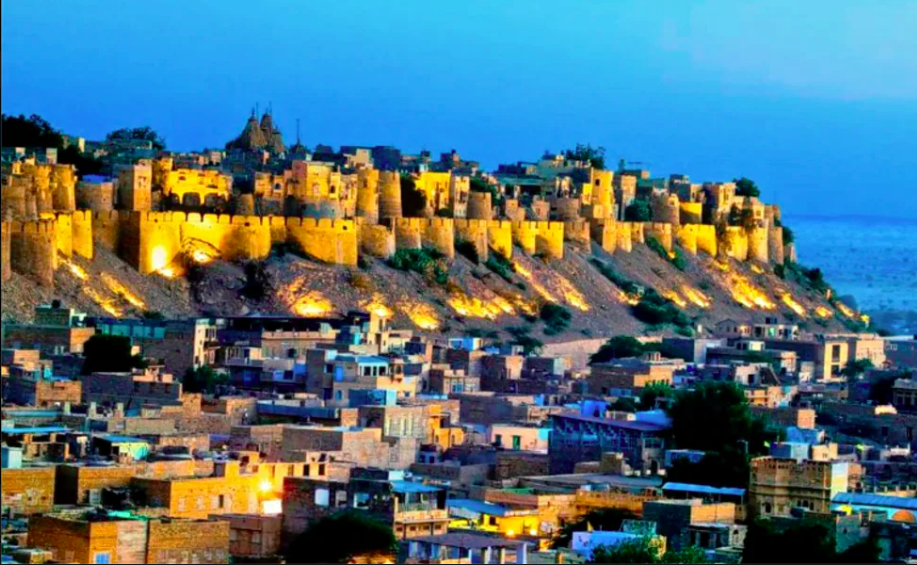
Perched majestically on the golden sands of the Thar Desert, Jaisalmer Fort—also known as the Sonar Fort Jaisalmer or Golden Fort Jaisalmer—is not just an architectural marvel but a living piece of history. Unlike most forts in India that stand as silent sentinels of the past, Sonargarh Fort Jaisalmer is very much alive, buzzing with daily life, colours, and culture. From its stunning architecture to the people who still reside within its ancient walls, everything about this fort justifies its title: The Living Fort of India.
The History Behind Jaisalmer Fort
The Jaisalmer Fort, also known as Sonargarh Fort Jaisalmer, was built in 1156 AD by Rawal Jaisal, the Bhati Rajput ruler who founded the city of Jaisalmer. It was strategically constructed on Trikuta Hill, offering a commanding view of the surrounding desert. Its golden-yellow sandstone structure gleams brilliantly under the desert sun, earning it the affectionate names Sonar Fort Jaisalmer and Golden Fort Jaisalmer.
Throughout history, Jaisalmer Fort played a vital role as a trade hub between India and Central Asia, controlling the ancient Silk Route. It witnessed numerous battles, particularly between the Bhati Rajputs and the Mughals, and later between the Rajputs and the Delhi Sultanate. Despite the turbulence, the fort endured and evolved, maintaining its charm and living essence for over 800 years.
Why It’s Called the Living Fort of India
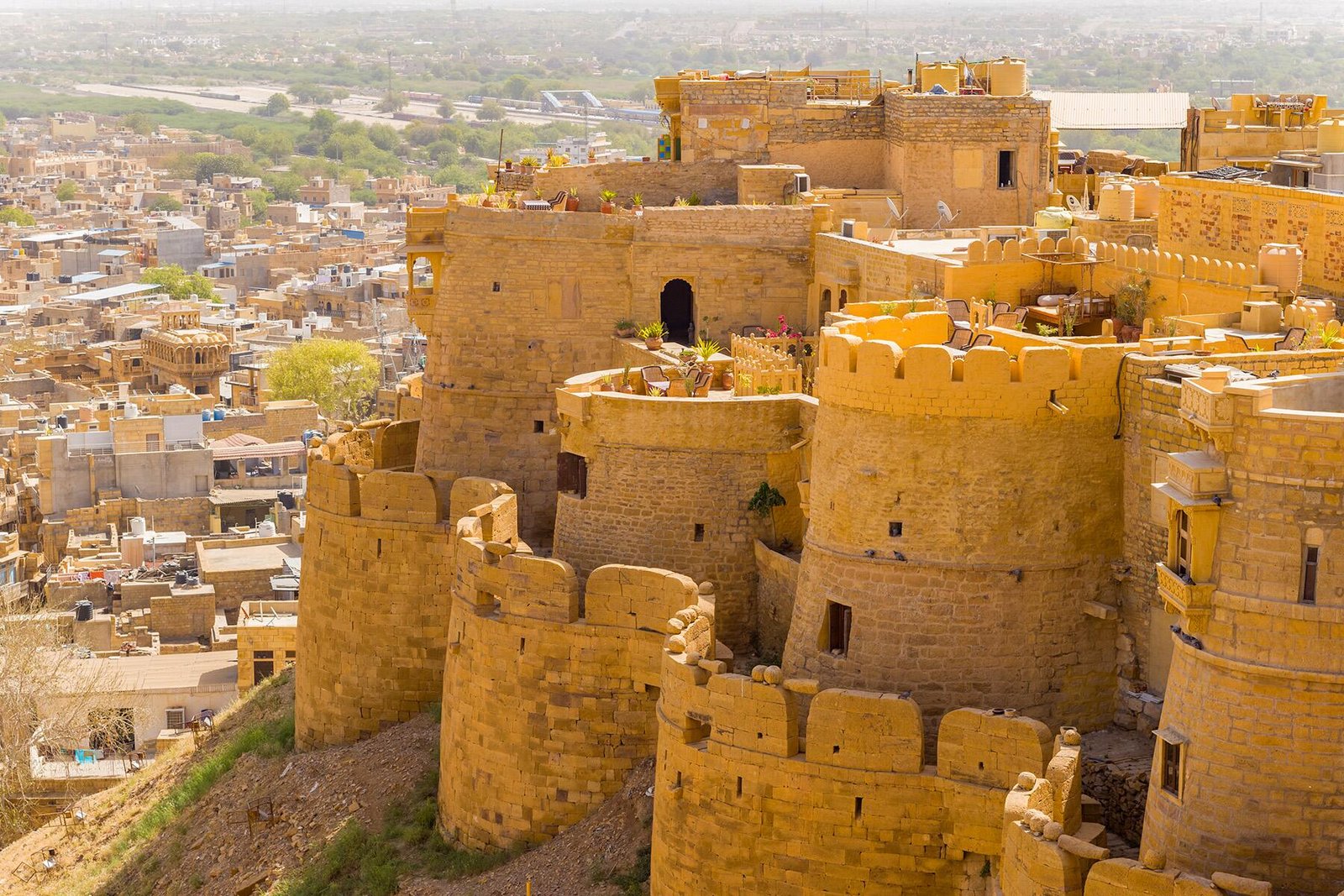
What makes the Golden Fort Jaisalmer unique is that it is still inhabited. Around 3,000 people, mainly descendants of the original residents, continue to live within its walls. These families have preserved their traditions, crafts, and culture for generations. Walking through the narrow lanes of Sonar Fort Jaisalmer, one can hear temple bells, smell local Rajasthani food, and see artisans crafting souvenirs — a perfect blend of ancient and modern life.
Unlike other forts that have turned into museums or archaeological sites, Jaisalmer Fort thrives as a living community. It houses homes, shops, restaurants, temples, and guesthouses, creating a vibrant ecosystem that merges tourism with tradition. Visitors can experience the fort not as an abandoned relic but as a living town, breathing and evolving with every sunrise.
Architectural Brilliance of Jaisalmer Fort
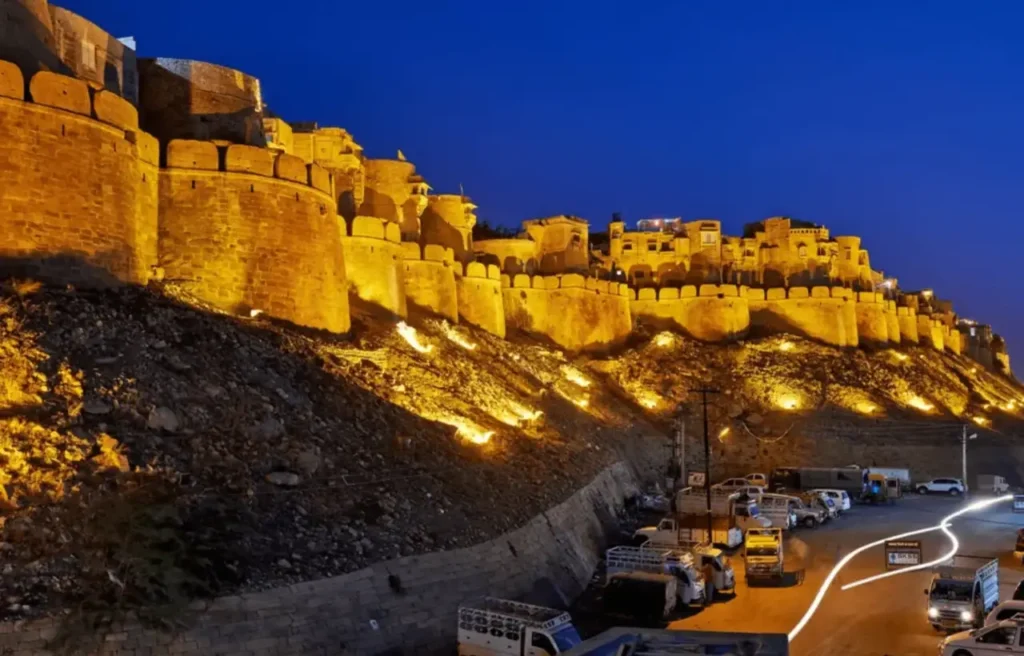
One of the most captivating aspects of Sonargarh Fort Jaisalmer is its stunning architecture. The entire structure is made of yellow sandstone, which glows golden at sunrise and sunset, giving it a surreal, magical appearance—hence the name Golden Fort Jaisalmer.
The fort’s design is a masterpiece of Rajput military architecture, featuring massive gates, high walls, intricate carvings, and latticed balconies. It spans 1,500 feet in length and 750 feet in width, protected by 99 bastions, of which 92 were built between 1633 and 1647. Inside, narrow, winding lanes lead visitors to hidden courtyards, havelis, temples, and local homes.
Among the architectural highlights are:
- Raj Mahal (Royal Palace) – The residence of the former rulers, showcasing fine Rajasthani craftsmanship.
- Jain Temples – A series of intricately carved temples dating back to the 12th and 15th centuries.
- Laxminath Temple – Dedicated to Lord Vishnu and Goddess Lakshmi, it is one of the oldest temples inside the fort.
- Merchant Havelis – such as Patwon Ki Haveli and Salim Singh Ki Haveli, which display the grandeur of Jaisalmer’s wealthy traders.
Each of these structures contributes to the fort’s living legacy, where faith, art, and daily life coexist seamlessly.
Jaisalmer Fort Entry Fee and Timings
For travellers planning a visit, understanding the Jaisalmer Fort entry fee and Jaisalmer Fort timings is essential.
- Jaisalmer Fort Entry Fee:
- Indians: ₹50 per person
- Foreigners: ₹250 per person
- Still Camera: ₹50
- Video Camera: ₹100
Some sections inside, like the Jain temples or royal palace museum, may have a small additional charge.
- Jaisalmer Fort Timings:
The fort is open daily from 9:00 AM to 5:00 PM.
However, since it is a living fort, many cafes and homes remain active even beyond these hours, making an evening stroll within its lanes equally mesmerising.
Knowing the Jaisalmer Fort timings allows visitors to plan their exploration perfectly—morning visits offer cool breezes and soft light for photography, while late afternoons bring the magical golden hue that gives the Golden Fort Jaisalmer its name.
Cultural and Daily Life Inside the Fort
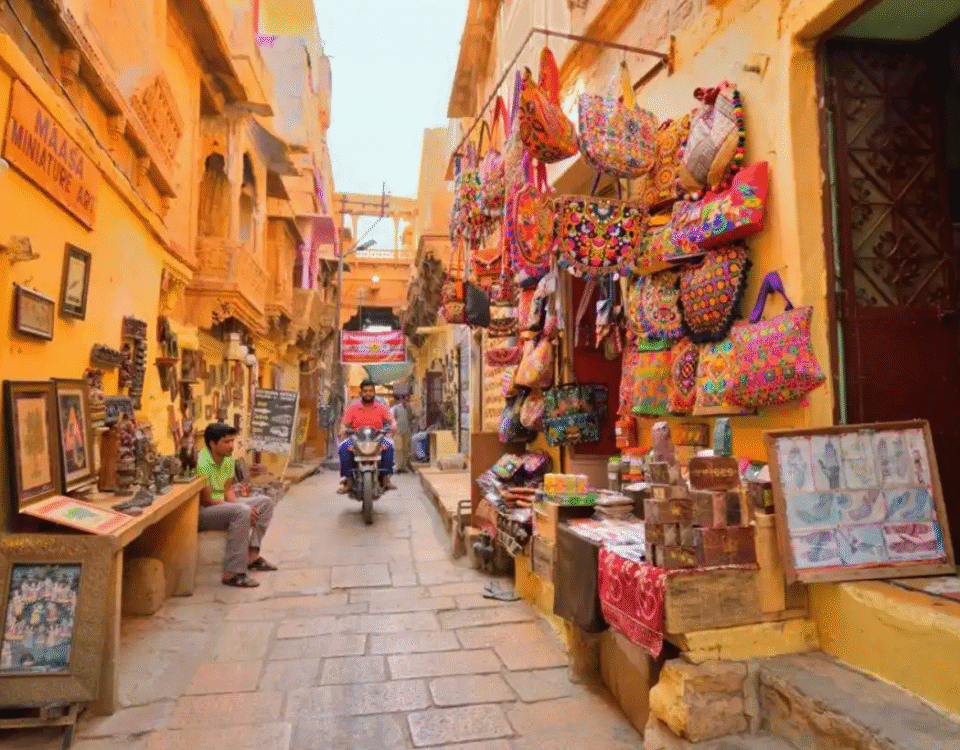
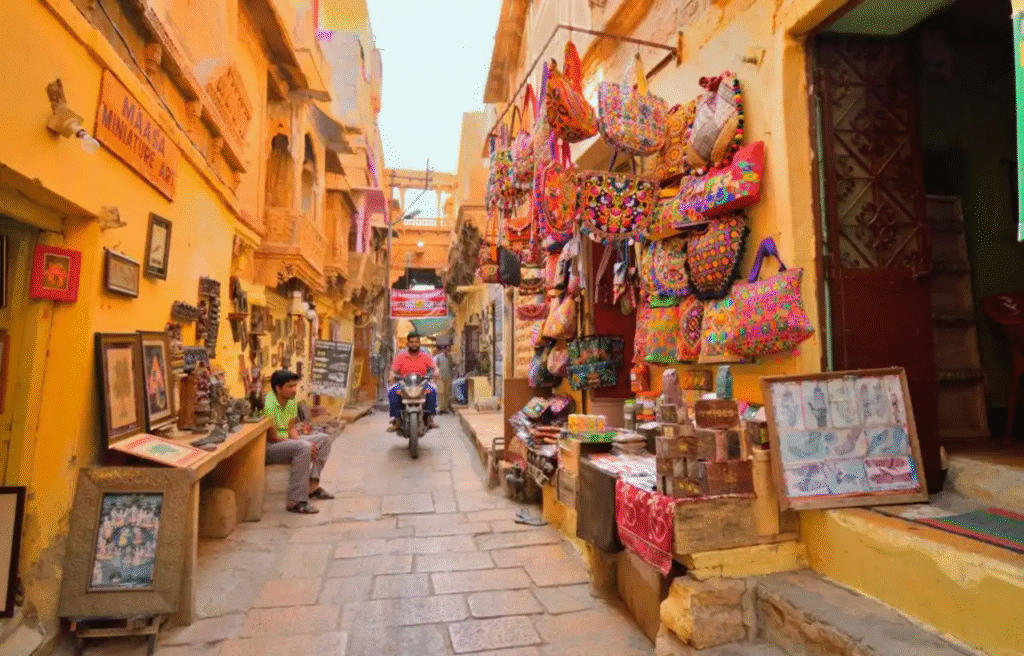
The Sonar Fort Jaisalmer isn’t just a historical monument; it’s a vibrant community. Life inside revolves around temples, markets, and homes. The local residents, known as Bhati Rajputs, are warm and welcoming. They continue traditional crafts like embroidery, mirror work, and leather art, which are sold in small shops and stalls across the fort.
Visitors often enjoy Rajasthani folk music, camel leather souvenirs, and authentic local cuisine served at rooftop cafes overlooking the desert landscape. These interactions make every trip to Sonargarh Fort, Jaisalmer, a deeply personal experience—one that connects the past with the present.
The Magical Sunset from Golden Fort Jaisalmer
One of the most unforgettable experiences in Jaisalmer is witnessing the sunset from the fort. As the sun dips below the horizon, the entire Golden Fort Jaisalmer glows with a honey-golden hue, mirroring the desert sands below. This breathtaking view, combined with the melodic sound of temple bells and the aroma of street food, captures the spirit of Rajasthan in its purest form.
Photographers and travellers from across the world flock to the Sonar Fort Jaisalmer to capture this spectacle — a moment where nature and architecture unite in perfect harmony.
Things to Do in and Around Jaisalmer Fort
When you visit Jaisalmer Fort, there’s a lot more to explore than just its ramparts and courtyards:
- Explore the Jain Temples: Marvel at ancient carvings and spiritual energy inside these 12th-century shrines.
- Visit the Royal Palace Museum: Learn about the rich history of Sonargarh Fort Jaisalmer and its royal lineage.
- Shop for Handicrafts: From leather goods to jewellery, the fort’s tiny markets are treasure troves of local craftsmanship.
- Dine with a View: Several rooftop cafes within the Golden Fort Jaisalmer offer panoramic views of the city and desert.
- Attend Desert Festivals: The annual Jaisalmer Desert Festival brings the fort alive with music, dance, and colour.
Every experience inside Jaisalmer Fort feels immersive, blending heritage and hospitality seamlessly.
Preservation Challenges of the Living Fort
Despite its glory, the Sonar Fort Jaisalmer faces significant conservation challenges. Continuous habitation and increasing tourism have put pressure on its ancient foundations. Water seepage, improper waste disposal, and structural erosion threaten its long-term survival.
Efforts are being made by the Archaeological Survey of India (ASI) and local NGOs to balance preservation with modern living. Strict regulations about the Jaisalmer Fort entry fee and visitor timings help control overcrowding and maintain cleanliness within the fort.
Sustainable tourism is key to ensuring that future generations can continue to experience the magic of this living fort.
Conclusion: A Timeless Wonder
The Jaisalmer Fort, also known interchangeably as Sonargarh Fort Jaisalmer, Sonar Fort Jaisalmer, and Golden Fort Jaisalmer, is far more than a historic landmark—it’s a living, breathing symbol of Rajasthan’s enduring spirit. From its mesmerizing golden hue to its lively community, from the bustling lanes to the serene Jain temples, every corner tells a story that transcends time.
When you pay the modest Jaisalmer Fort entry fee and step inside during the official Jaisalmer Fort timings, you’re not merely visiting a fort—you’re entering a world where the past lives on in every heartbeat, every chant, and every smile. And when the sun sets, your journey continues beyond the fort with a magical camp in sand dunes Jaisalmer, where the golden sands shimmer under starlit skies, offering an unforgettable glimpse into Rajasthan’s desert charm.
That’s why Jaisalmer Fort isn’t just another tourist attraction; it’s rightfully called “The Living Fort of India”.