Patwon Ki Haveli Jaisalmer: History, Design, and Cultural Significance

3-Day Jaisalmer Itinerary: Explore the Golden City’s Top Attractions
November 10, 2025
Why Jaisalmer Fort Is Called the Living Fort of India
December 24, 2025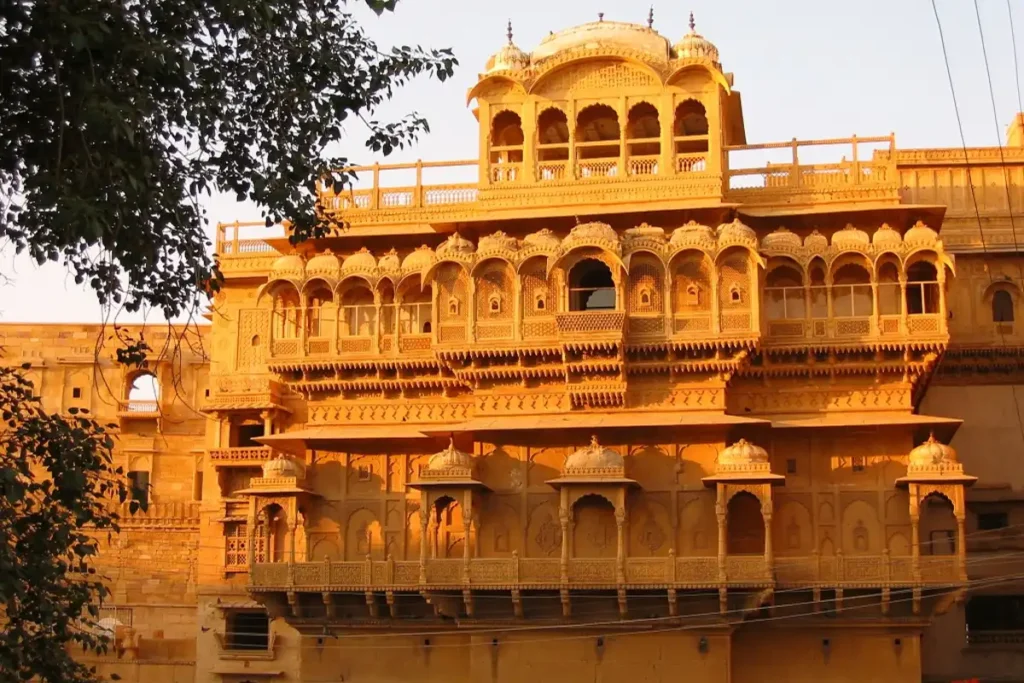
Located in the heart of the Golden City, Patwon Ki Haveli Jaisalmer stands as one of the most breathtaking architectural wonders in Rajasthan. Known for its intricate carvings, golden sandstone structure, and historical grandeur, this haveli represents the cultural richness of Jaisalmer’s glorious past. Whether you are a history lover, an architecture enthusiast, or a traveller seeking to explore royal India, Patwon Ki Haveli Jaisalmer is a must-visit heritage site that beautifully narrates the story of opulence, art, and tradition.
If you’re planning a Jaisalmer 2 Day Itinerary, make sure to include a visit to Patwon Ki Haveli Jaisalmer — it perfectly captures the spirit of the city’s golden heritage and offers a glimpse into Rajasthan’s royal charm.
Patwon Ki Haveli History: The Pride of Jaisalmer
The Patwon Ki Haveli history dates back to the early 19th century. It was built between 1805 and 1860 by Guman Chand Patwa, a wealthy trader who made his fortune in gold and silver thread trading. Guman Chand was among the richest merchants in Jaisalmer, and he decided to construct a magnificent series of havelis for his five sons. Hence, the term “Patwon Ki Haveli” literally means “Haveli of the Patwas”.
Each of the five havelis was built for one son, and together they form one of the largest mansion complexes in Jaisalmer. What makes Patwon Ki Haveli Jaisalmer so unique is that it was the first haveli ever constructed in the city, marking the beginning of a new era of lavish architecture in the Thar Desert.
The Patwon Ki Haveli history also reflects the prosperity of the merchant community during the 19th century. Unlike the royal palaces built for kings, this haveli was made by a common man who rose to prominence through trade and enterprise. It demonstrates how commerce played an essential role in shaping the social and architectural landscape of Rajasthan.
Architectural Design and Features of Patwon Ki Haveli, Jaisalmer
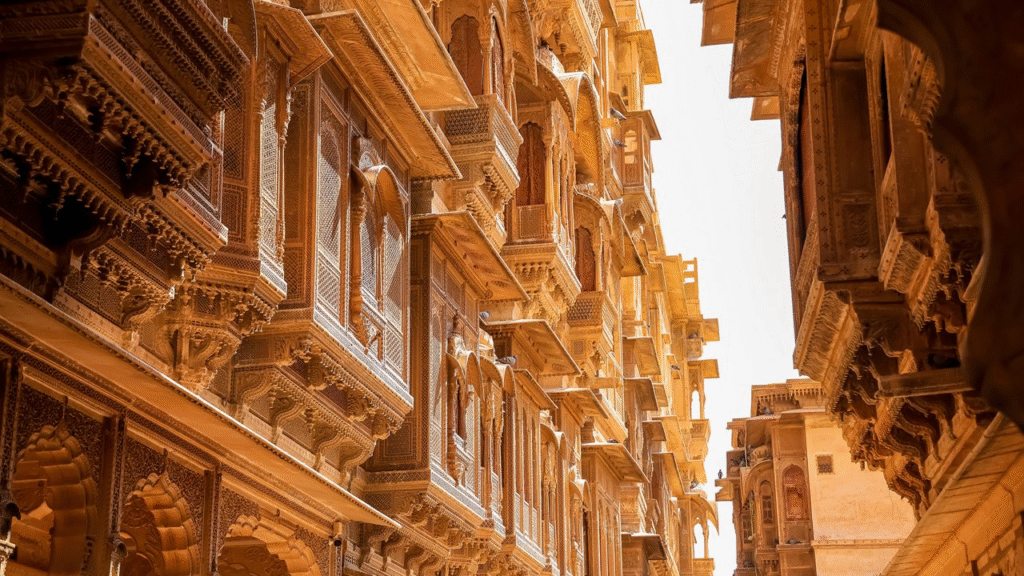
When you step inside Patwon Ki Haveli, Jaisalmer, the first thing that captures your attention is the intricate craftsmanship and detailed carvings on the yellow sandstone. The structure is a masterpiece of Rajasthani architecture, blending Mughal and Rajput design elements. Each part of the haveli tells a story through its carvings, murals, and designs.
1. Architectural Layout
The complex comprises five separate havelis, each connected but distinct in design. The first haveli, the largest and most elaborate, was built by Guman Chand Patwa. The other four were later added by his sons. Together, they form an impressive cluster of courtyards, balconies, archways, and corridors that reflect the grandeur of Jaisalmer’s golden age.
2. Detailed Carvings
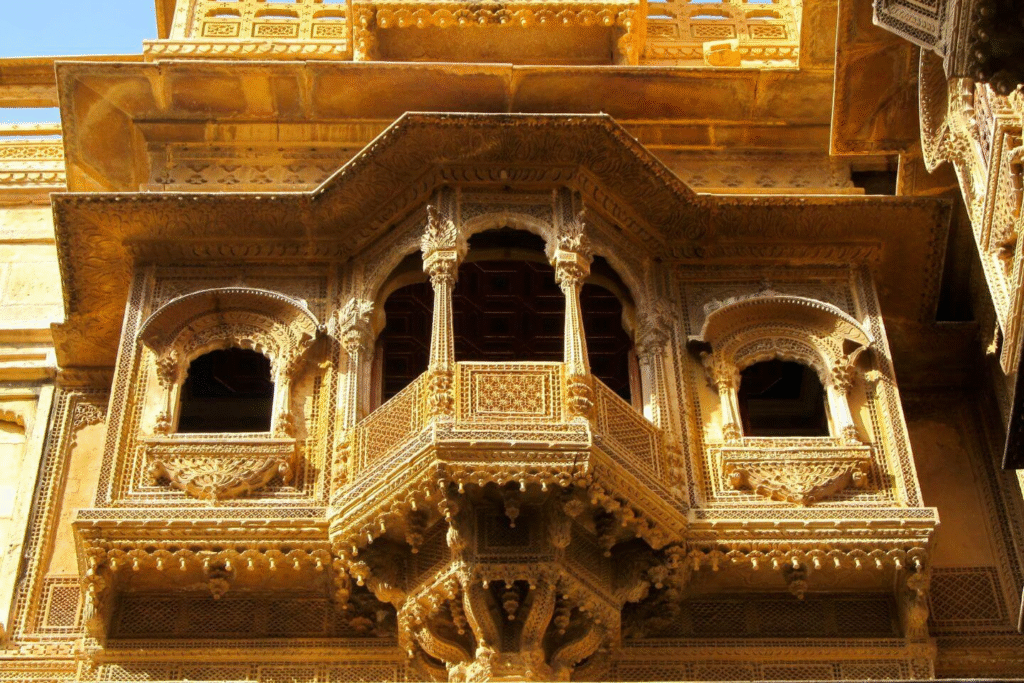
The façade of Patwon Ki Haveli Jaisalmer is covered with intricate jharokhas (overhanging balconies), latticed windows, and arches, all handcrafted from golden sandstone. The carvings depict floral motifs, mythological figures, and geometric patterns, showing the extraordinary skill of the local artisans.
3. Use of Golden Sandstone
Like most monuments in Jaisalmer, the Patwon Ki Haveli is built entirely from yellow sandstone, which glows beautifully under the desert sun. This gives it a “golden” appearance, earning Jaisalmer the nickname “The Golden City”. The use of this local material also helped the structure withstand the harsh desert climate.
4. Interiors and Frescoes
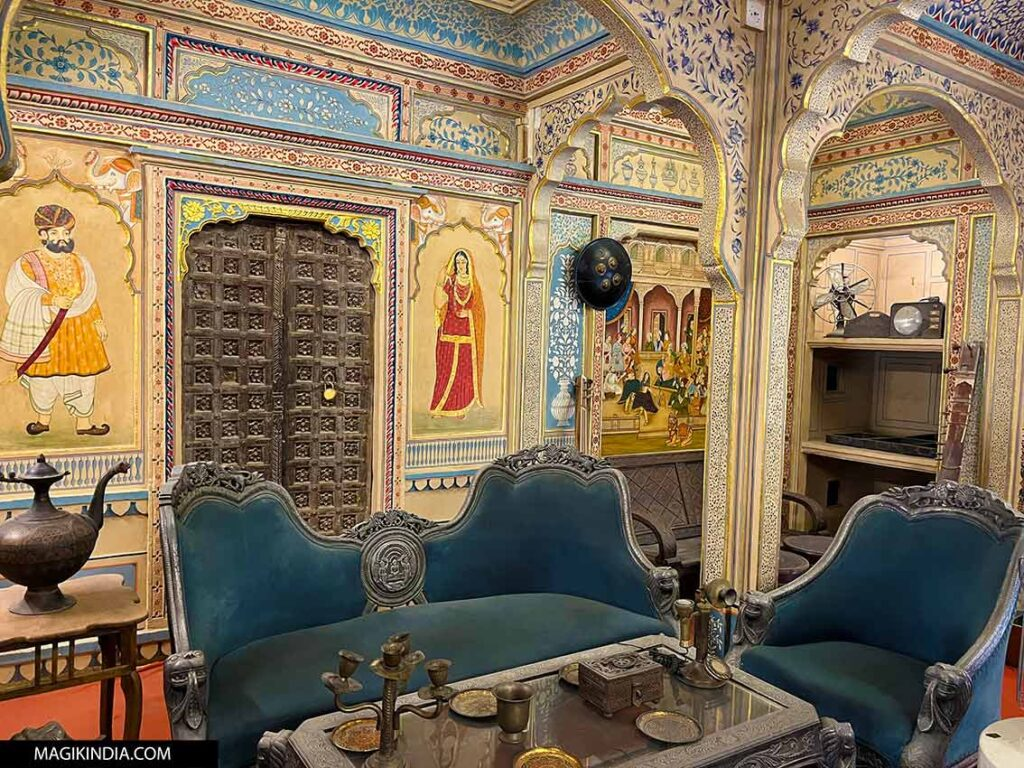
Inside the haveli, the walls and ceilings are adorned with rich murals, mirror work, and paintings. The rooms display fine examples of Rajasthani décor — colourful fabrics, antique furniture, and ornate ceilings. The corridors and halls are spacious, allowing air circulation even during hot summers.
Cultural and Historical Importance of Patwon Ki Haveli
The Patwon Ki Haveli history is not just about architecture; it is also deeply connected to the cultural and social life of Jaisalmer. This haveli played a crucial role in representing the economic and artistic prosperity of the city.
1. A Symbol of Wealth and Artistry
Patwon Ki Haveli Jaisalmer is often regarded as a symbol of the city’s flourishing trade and artistry. The Patwas were not royal, yet their wealth allowed them to construct a monument that rivalled the palaces of kings. This reflects the rise of the merchant class in Rajasthan, which significantly influenced the region’s art and culture.
2. Center of Artistic Expression
The haveli was not only a residence but also a place where artists, craftsmen, and traders met. It became a hub of creativity, where architecture, sculpture, and design flourished. Even today, visitors can witness fine examples of ancient Rajasthani art preserved within the walls of Patwon Ki Haveli, Jaisalmer.
3. A Heritage Site Preserving Jaisalmer’s Legacy
Over the years, Patwon Ki Haveli Jaisalmer has become one of the most visited tourist attractions in the city. It is now maintained by the Archaeological Survey of India (ASI), ensuring its preservation for future generations. Parts of the haveli have been converted into museums and galleries showcasing artefacts, textiles, and artworks from the royal era.
Patwon Ki Haveli Jaisalmer: A Tourist’s Delight
For travellers visiting Rajasthan, Patwon Ki Haveli Jaisalmer is an unforgettable experience. It gives a glimpse into the luxurious lifestyle of the 19th-century merchants and showcases how art and culture thrived in the desert region.
1. Museum and Art Exhibits
Several sections of the haveli have been transformed into museums that display ancient artefacts, paintings, costumes, and utensils. Visitors can explore exhibits that highlight the Patwon Ki Haveli history and understand the daily life of the people who once lived here.
2. Photography and Architecture Lovers’ Paradise
The stunning carvings, ornate balconies, and play of light on the sandstone make Patwon Ki Haveli Jaisalmer a perfect spot for photography enthusiasts. The haveli’s golden hue, especially during sunrise and sunset, creates a magical atmosphere that captures the essence of Jaisalmer.
3. Accessibility and Location
Located near the Jaisalmer Fort in the main city area, Patwon Ki Haveli is easily accessible. Tourists can walk through the narrow lanes of the old town and reach this magnificent structure that stands tall amid the bustling bazaars.
Cultural Significance and Legacy
The Patwon Ki Haveli history reflects the fusion of commerce, culture, and craftsmanship that defined Jaisalmer’s identity. The haveli not only served as a home but also as a testament to the artistry of local craftsmen. It stands today as a proud reminder of how art, architecture, and economy were intertwined in Rajasthan’s past.
The cultural significance of Patwon Ki Haveli, Jaisalmer, extends beyond its architecture. It represents:
- The rise of non-royal wealth in India’s desert kingdoms
- The integration of Indian and Islamic design elements
- The preservation of community heritage and traditional craftsmanship
Today, it continues to inspire architects, historians, and travellers worldwide. The haveli’s preservation as a cultural museum ensures that future generations can witness the grandeur of Rajasthan’s heritage.
Conclusion
The story of Patwon Ki Haveli Jaisalmer is a journey through time — from the prosperous days of the Patwa family to the modern era of heritage tourism. This iconic structure is not merely an architectural wonder but also a symbol of Jaisalmer’s cultural heart. Its golden sandstone walls, intricate carvings, and rich history make it one of the most precious gems of Rajasthan.
Whether you explore it for its design, its stories, or its aura, Patwon Ki Haveli Jaisalmer leaves every visitor awestruck. It stands as a timeless reminder of the city’s glorious past, echoing tales of art, wealth, and beauty through every carved wall and shining arch.
And after exploring this architectural marvel, travelers often extend their journey with an unforgettable camp in sand dunes Jaisalmer, where the desert sky, traditional music, and golden sands create a magical experience. So, the next time you plan your Rajasthan trip, make sure to walk through the grand corridors of Patwon Ki Haveli Jaisalmer — where history still breathes in golden stone.